A lot of research has been done on people’s responses to robots. In a nutshell, it comes to the fact that the more a robot resembles a person, especially a child but also a friendly-looking animal, the more we tend to feel empathy towards the machine, particularly when we see it in distress. Remember Data from “Star Trek: The Next Generation” or a popular toy Furby that needed to be fed and played with? These are just some examples of anthropomorphism. If we want to go even further, we can risk a theory that, in a way, machines test our humanity.
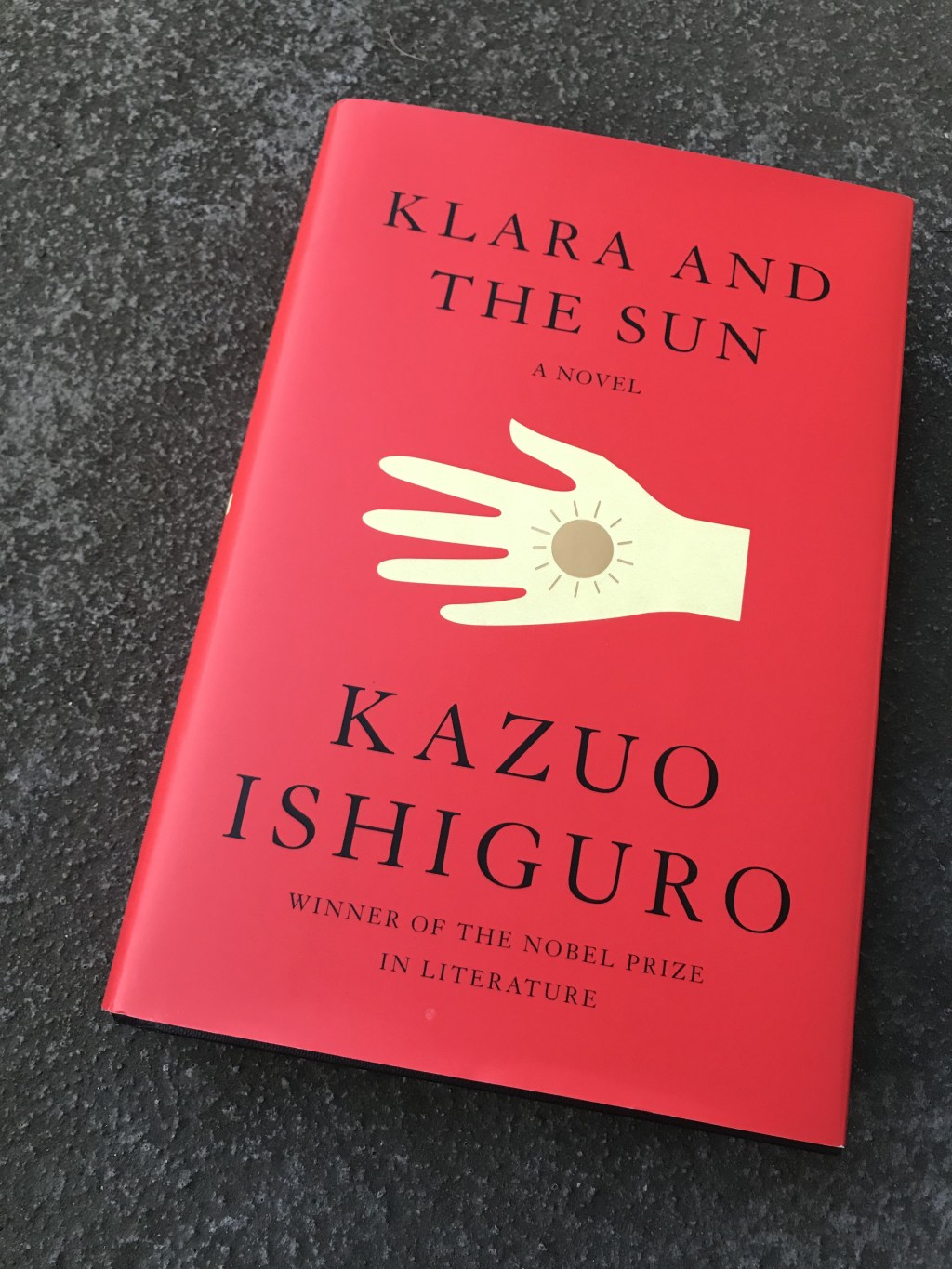
Klara, a protagonist of Kazuo Ishiguro’s dystopian science fiction novel, “Klara and the Sun,” is A.F., which stands for “Artificial Friend.” She and other machines of her generation are designed to provide companionship to children. In this futuristic world, some parents decide to have their children “lifted” – genetically engineered to improve their chances of success. Such a procedure carries a risk, and children can become seriously ill. They are often lonely because they often study at home and see their friends only at specially organized integrational meetings. Their A.F.s serve as their friends – and Klara is a friend of Josie. She wants to help sick Josie get better and believes in the sun’s healing power, so she sacrifices her well-being as a functioning machine to convince the sun to heal Josie.
The novel is told in Klara’s voice, and with haunting clarity, observing the new world and watching people’s emotions and relationships, Klara becomes an almost ideal friend. Yet, she is just a servant, and when Josie indeed gets better and enters a college, Klara finds herself first in a utility closet and later in a scrap yard for discarded A.F.s.
This is such a mesmerizing story! Looking through Klara’s friendly eyes, we see how important love and friendship are, and yet, in the end, the most important is people’s way of advancing in the world. Change can bring new friends and new love. Klara doesn’t judge people; she remembers the good memories, the sun’s warming rays, and the light and happiness she brought into a girl’s life. Even after her friend Josie moved on, Klara believed that she, the machine, was the lucky one to serve such an exceptional girl.
This touching novel touches on so many ethical issues: the questions of parental love, dealing with loss, and mortality. I finished the book feeling sad for Klara but also understanding Josie and her mother. The connection between a machine and a girl was real. And, in the end, it was hard to say who was a better human.
KLARA AND THE SUN, by Kazuo Ishiguro, published by Alfred A. Knopf, 2021
 Infinite Books
Leave a comment