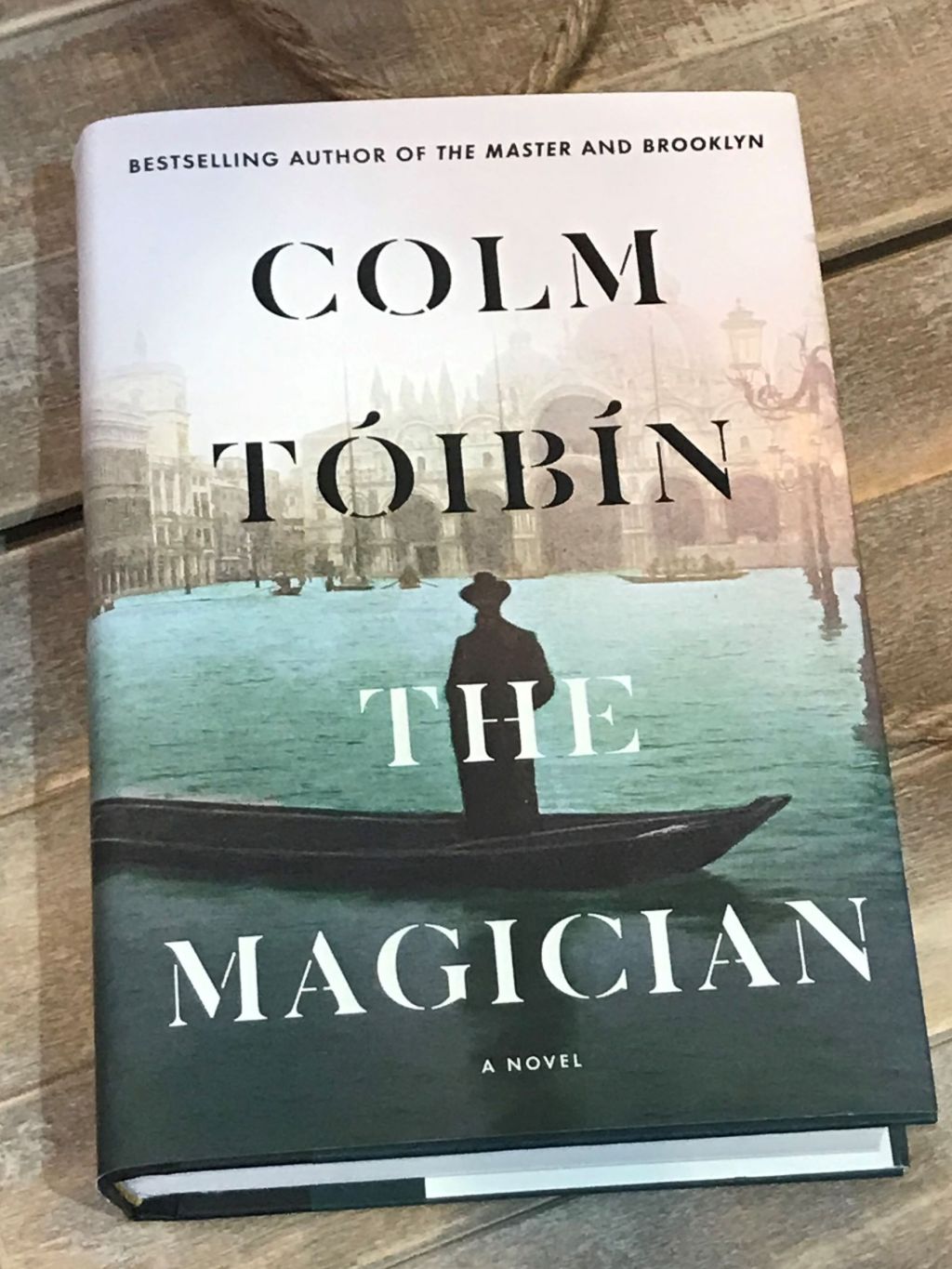
I decided to read it when I learned that “The Magician” by Colm Tóibín was included in the New York Times Critics Top Books of 2021. In my youth, I was greatly influenced by “The Magic Mountain“ by Thomas Mann. Now I don’t even know why it happened, but at the time it was a work that, alongside “One Hundred Years of Solitude” by Gabriel García Márquez, became a milestone in my journey of discovering great literature.
“The Magician” is a novel based on the life of Thomas Mann: from his childhood in Lubeck, under the watchful eyes of a respectable grain merchant father and an impulsive Brazilian mother, through his youth in Munich, a city open to the new cultural ideas, where Thomas got to know the art scene and met his future wife Katia, who came from a wealthy secular Jewish family. The following years were the period of WWII and the family emigration to Switzerland, France, and finally to America. He spent the war and post-war years in Princeton and Los Angeles, finally, at the end of his life, returning to Switzerland.
The novel takes us into the cafes of Munich before WWII when everything was discussed and everything was permitted. It shows Thomas and his family struggling to leave Europe on a crowded ship to escape the war. It is not only a book about a famous writer but also about people in his life. My favorite was Mann’s wife, however, his children were quite memorable as well, especially Erica, who married W.H. Auden to get a British passport, and Klaus, a writer and drug addict who committed suicide. There are many famous people in this novel, people who have become legends for us but for Mann and his family were just acquaintances, and often rather annoying ones, like Albert Einstein, obviously infatuated with Katia or Alma Mahler, a great dame, somehow resembling the Dowager Countess of Grantham from “Downton Abbey”.
Mann was a keen observer of people and he drew inspiration for his novels from situations brought by life. Even his family found this fascination unusual. “The Magic Mountain” was based on a stay in a sanatorium – at first Katia stayed there, later Thomas joined her. Holidays in Venice and meeting a young Polish boy staying in the same hotel as Mann with his wife resulted in “Death in Venice”. “Buddenbrooks” were based on Katia’s family. His six children called him “The Magician”. He was a very private person, usually escaping after family dinners to his study but did not shy away from lectures and public speeches where he felt people were expecting to hear his opinion regarding the most important issues.
Colm Tóibín wrote a book that is both engaging and subtle. His Mann is an artist, a great Nobel Prize-winning writer and a family man who appreciates the closeness of his wife and children but yearns, mostly platonically, for the beauty of young men. Reading about Mann, I grew even more fond of him, understanding his struggles and admiring his magic.
 Infinite Books
Leave a comment